
Dr. Josué Medellín-Azuara
Professor
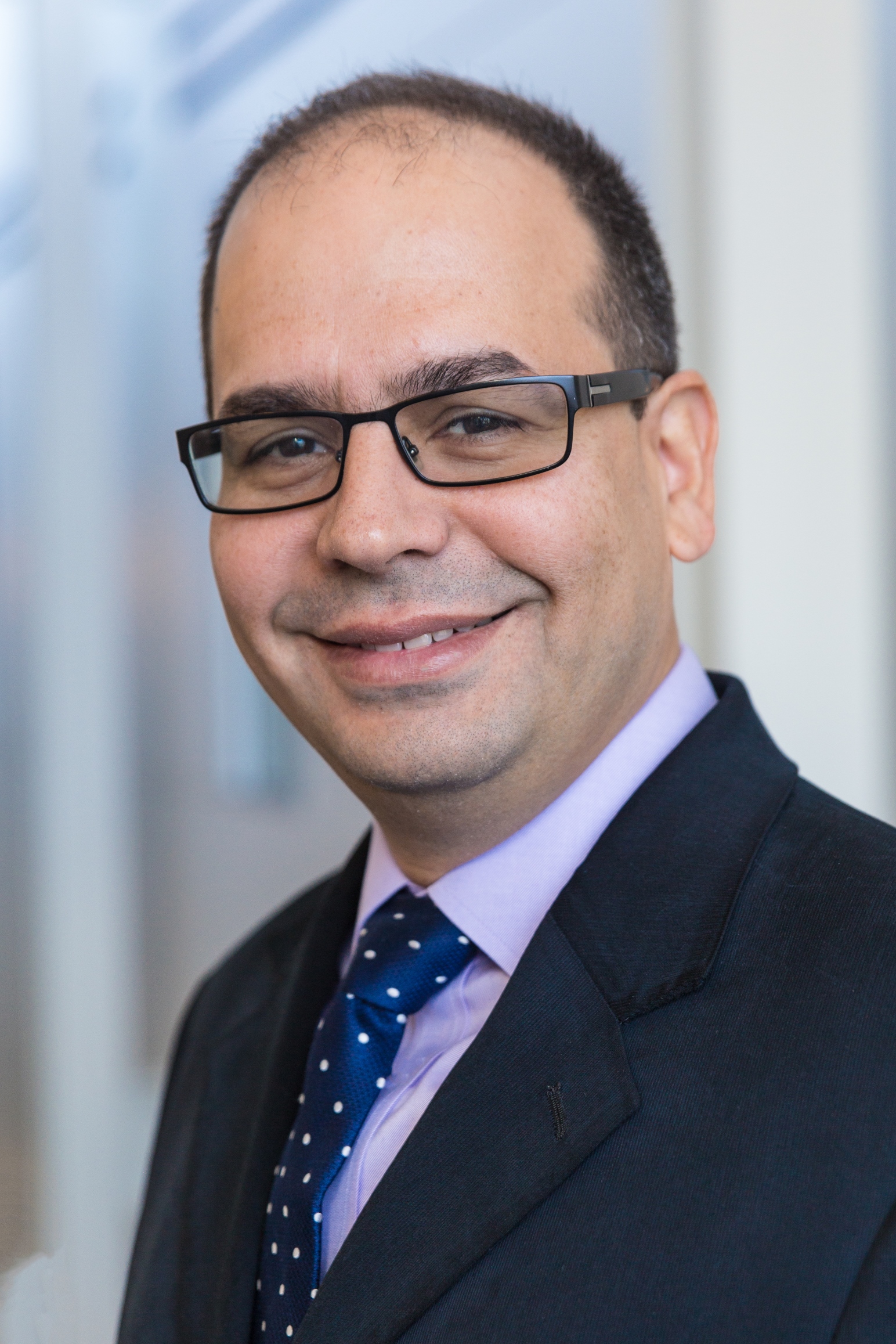
Josué Medellín-Azuara is a Professor of Civil and Environmental Engineering at the University of California, Merced. He is also an Agronomist at the UC Merced, Agricultural Experiment Extension, Associate Director of the UC Davis Center for Watershed Sciences, and an Adjunct Research Fellow at the Public Policy Institute of California.
His research focuses on large-scale hydro-economic modeling for water management, the economic impacts of climate extremes, integrated water resources management, and sustainable groundwater management. He has served as a member of an ad hoc committee of the National Academies of Sciences, Engineering, and Medicine reviewing long-term operations of California’s Central Valley Project and State Water Project.
His work also includes water resources management in transboundary basins and U.S.–Mexico collaboration on water and agricultural issues. He has served as principal investigator on research projects involving water resources in Mexico and the United States.
Medellín-Azuara holds degrees in Mechanical and Electrical Engineering and Business Administration from Tecnológico de Monterrey. He earned a master’s degree in Agricultural and Resource Economics and a Ph.D. in Ecology, with a specialization in Environmental Policy, from the University of California, Davis. His doctoral research examined the economics of environmental flows in the Colorado River Delta.
He has been a member of Mexico’s National System of Researchers. His professional experience also includes work in the paper and automotive industries and consulting for government agencies, nonprofit organizations, and academic institutions. He was raised in Tempoal, Veracruz, Mexico.
Research
News
Community Perspectives and Environmental Justice in California’s San Joaquin Valley: New published paper from the WSML lead by Humberto-Flores
A new Social Science publication about the peoples surrounding UC MercedA new paper was published by Humberto Flores-Landeros, along with Dr. Angel Santiago Fernandez-Bou and Professor Josue Medellin-Azuara. The paper covers the personal environmental and...
Underrepresented, Understudied, Underserved: A new paper from the WSML.
A new paper published by Dr. Angel Santiago Fernandez-Bou, along with Humberto Flores-Landeros and Professor Josue Medellin-Azuara in the journal of Environmental Science & Policy was released online May 4th 2021. The paper covers gaps and opportunities for advancing justice in disadvantaged communities.
New Publication in the Proceedings of the National Academy of Sciences
Professor Josue Medellin-Azuara has published a new article “A Coupled Human-Natural System Analysis of Freshwater Security Under Climate and Population Change” in the PNAS journal.
Current Projects
Josué Medellín-Azuara’s research crosses a variety of fields connecting agriculture, water, and the stakeholders involved. While his specialty centers around modeling water use and economics in agriculture he has branched out to connect with stakeholders from all sides.

University of California Merced
Teaching
Hydrology & Climate (ENVE110)
Basics of the global climate, hydrologic cycle, and critical zone are discussed. Fundamentals of surface-atmosphere water and energy exchange in the form of precipitation, snow, evaporation, and transpiration form the basis for analysis of hydrologic systems. Principles of surface and subsurface flow, statistical and probabilistic methods, unit hydrographs, and flood frequency analysis & flood routing are also covered. Course focus is primarily in scientific concepts, with design considerations forming the basis for a final project.
Engineering Economic Analysis (ENGR155)
Application of economic principles regarding problems in engineering are explored. During the semester, students are introduced to the mathematical and conceptual basis on which project analysis is built. The techniques and tools necessary for making informed financial decisions in the engineering practice are discussed. Topics such as the time value of money, interest, equivalence, cost-benefit analysis, depreciation, taxes, cash flow, and financial risk are covered.
Environmental Systems Seminar (ES291)
ES291 goals
(1) To gain exposure to a range of current science topics in Environmental Systems and Earth System Science from researchers working actively in their field; (2) to have an opportunity to interact with guest speakers, ask questions, and discuss research and career opportunities from experts; and (3) to gain experience critiquing a scientific presentation and writing a concise summary about a presentation in order to improve analytical and communication skills.